Interactive 3D
Turn the idea into an experience people can explore
I use real-time 3D where movement, space, and interaction make the story easier to understand—not just more decorative.
Shape the 3D storyStaged example; no client data is shown.
A practical example
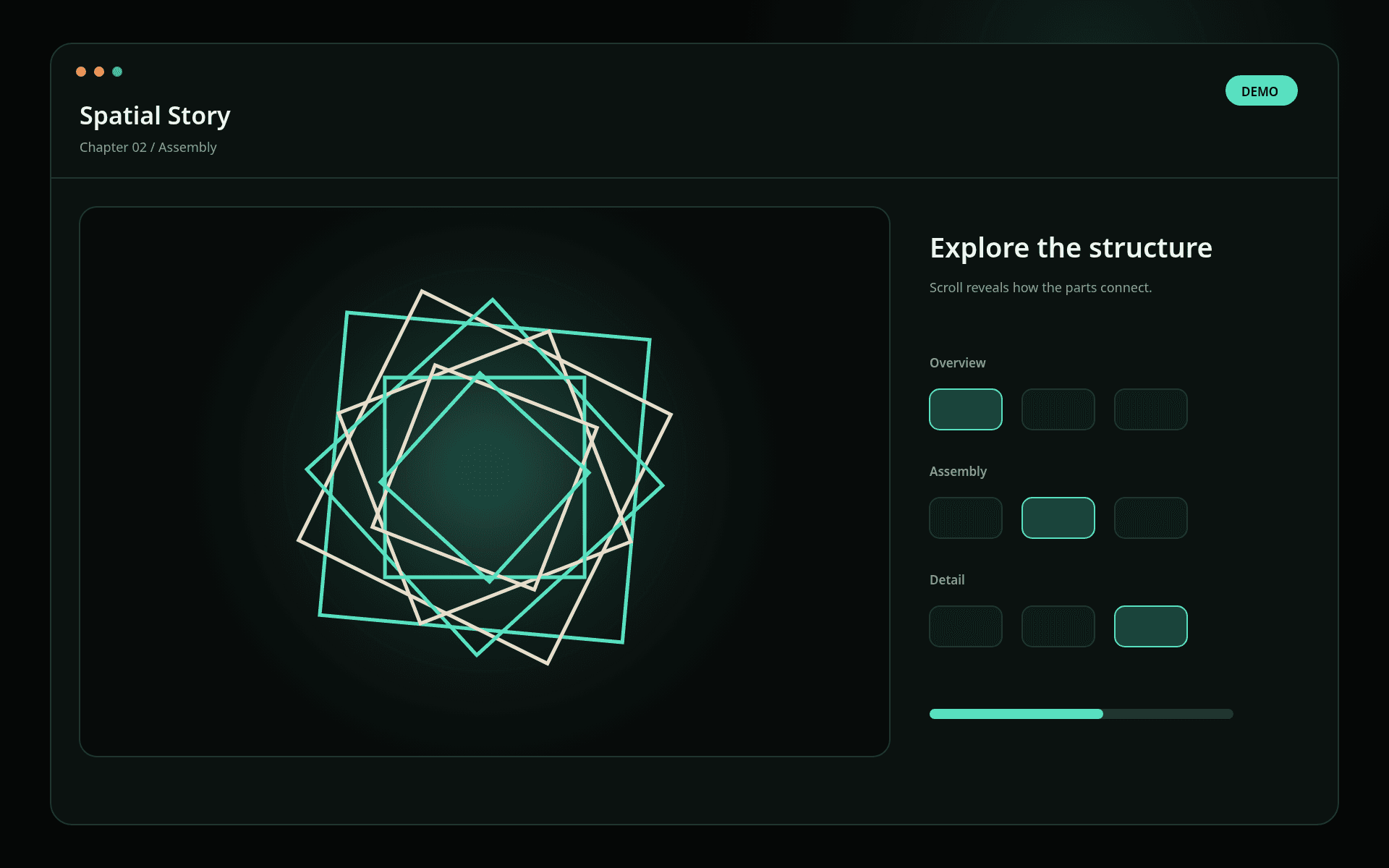
See a representative interactive 3d websites context without client data or implied results.
What it is
An interactive 3D website uses real-time WebGL scenes to explain a product, place, system, or story through movement and spatial interaction.
The problem
A conventional layout can undersell ideas that depend on scale, movement, assembly, or spatial relationships.
Best fit
- launches with a strong spatial concept
- products that benefit from guided exploration
- brands with a meaningful interactive story
What improves
Interactive 3D websites where spatial storytelling supports a clear message or task.
Main result
The 3D experience helps people understand and remember the central idea.
Clearer experience
The spatial visual supports a real product or communication decision.
Dependable delivery
Quality adapts to device capability, reduced motion, and save-data preferences.
Possible scope
- TresJS scene direction
- procedural geometry and shaders
- scroll or pointer interaction
- static fallbacks and performance tiers
Before work starts
- Every scene follows an agreed frame, memory, and device budget.
- Searchable content and core actions remain usable without WebGL.
How I work
Understand
I clarify the users, business need, constraints, and available evidence.
Shape
I turn that context into a practical structure, prototype, and delivery plan.
Build
I implement the interface in testable slices, checking accessibility and performance.
Ship
I verify agreed flows, document ownership, and prepare a controlled release.
Clear ownership
I lead product thinking, UX, frontend engineering, accessibility, performance, and delivery. Backend, infrastructure, security, content, and domain specialists join when the work needs them. AI supports research, iteration, QA, and documentation; people remain accountable for decisions and release quality.
Common questions
- When does a website benefit from real-time 3D?
- An interactive 3D website uses real-time WebGL scenes to explain a product, place, system, or story through movement and spatial interaction.
- Which teams are a good fit for an interactive 3D website?
- This service is best suited to launches with a strong spatial concept, products that benefit from guided exploration, brands with a meaningful interactive story.
- What can an accessible 3D website delivery include?
- A typical scope can include TresJS scene direction, procedural geometry and shaders, scroll or pointer interaction, static fallbacks and performance tiers. The final scope is agreed before work begins.